What Is a Google
Knowledge Panel?
Can your website help support your online presence?
You’ve probably seen one without knowing what it was called.
Search for someone on Google, and a box appears with their photo, a short description, website, and other details about their background. That information box is called a Google Knowledge Panel.
It gives people a quick introduction to who someone is and what they’re known for. And if you’ve spent years building a career, contributing to your community, or having your work featured in publications, it’s something you may have wondered about.
But where does that information come from? And what role does your website play?
What Is a Google Knowledge Panel?
Google Knowledge Panels bring together information about people, organizations, places, and other subjects. Google generates them automatically using information from multiple sources across the web.
For an individual, a panel might include a photograph, professional description, website, social profiles, and other publicly available facts.
This is different from a Google Business Profile, which helps a local business display information such as its location, service area, hours, and customer reviews. A personal Knowledge Panel focuses on the person and their public identity.
Your Accomplishments May Be Scattered Across the Internet
Think about all the places your name might appear.
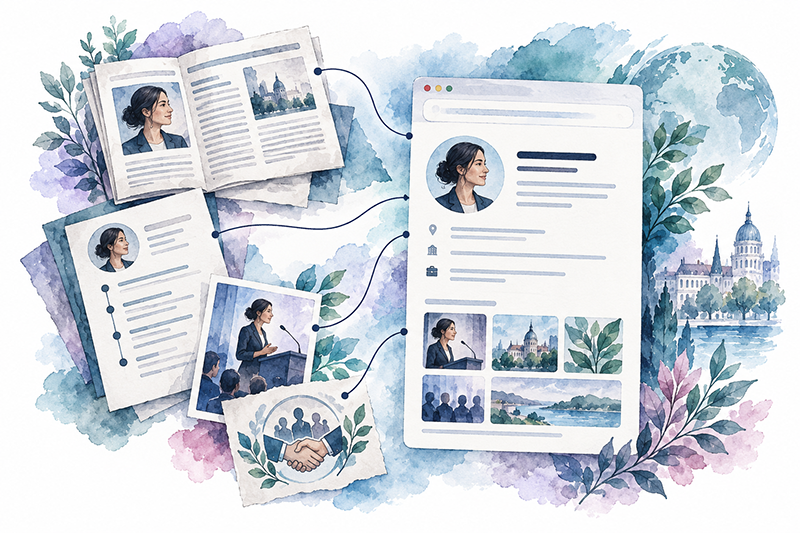
A news article about a community project. A professional biography on an organization’s website. An interview. A nonprofit board listing. An article you wrote several years ago.
Each one tells part of your story. But someone researching you may have to visit several websites to put that story together.
A personal website gives those pieces a home.
It creates a place where visitors can learn about your experience, understand your work, and explore the sources that document it.
How a Personal Website Fits In
At Pixel Studio Designs, we build personal websites that bring together a professional’s experience, accomplishments, and public presence in one organized place.
Depending on your background, your website may include:
- A clear professional biography
- Career history and experience
- News coverage, interviews, and published articles
- Charitable work and community involvement
- Board positions and organizational affiliations
- Links to relevant outside sources
The value is in connecting those pieces through a website that feels cohesive, professional, and easy to explore.
You’ve already built the experience. We help you present it clearly.
The Behind-the-Scenes Work Matters, Too
A personal website should be easy for people to explore and for search engines to understand. That takes more than a polished design.
At Pixel Studio Designs, we also take care of the technical foundation: clear page structure, descriptive SEO titles, meta descriptions, and settings that allow the intended public content to be crawled and indexed. Google ultimately decides what it indexes and how it displays a page in search results.
Where appropriate, we add structured data, also called schema markup. This is information in the website’s code that helps search engines understand who a page is about and how its details connect. For a personal website, that can include your name, professional role, official website, and links to profiles that represent the same person. The markup should accurately reflect the information visitors can see on the site.
Schema and SEO settings help communicate your information clearly. They do not guarantee a Knowledge Panel, a particular search ranking, or a special search appearance. They are part of building a well-organized, technically sound online presence.
Can a Website Get You a Knowledge Panel?
A website cannot guarantee a Google Knowledge Panel.
Google determines when a panel appears through its automated systems, based on available public information and its relevance to a search. There isn’t a website package that can promise approval or a particular timeline.
Our approach is to build a clear, accurate home for your professional identity, supported by links to relevant coverage and organizations.
Because Google draws information from across the web, we see that website as a useful part of a broader online presence. It’s a foundation—not a promise of placement.
If a Knowledge Panel already exists, Google also provides a process for the person or their authorized representative to claim it and suggest updates. Claiming an existing panel is a separate step from building a website.
Does It Need to Be a Large Website?
Not necessarily.
A thoughtfully designed one-page website can provide plenty of room for a biography, career highlights, media coverage, community involvement, and contact information.
The right structure depends on how much you have to share. Someone with an extensive collection of publications may benefit from separate pages. Someone else may be best served by one well-organized page.
The goal is to make your background easy to understand and your supporting material easy to find.
A Website That Works Beyond Google
Whether or not a Knowledge Panel appears, a personal website has a practical purpose.
It gives journalists somewhere to find your biography. It gives organizations a link to share when introducing you. It helps prospective clients, collaborators, and community members learn more about your experience.
And it gives you a central place to keep your professional story current as your work continues.
Bring Your Professional Story Together
Have you been featured in publications, served on boards, contributed to charitable organizations, or built a career that deserves more than a short social media bio?
Pixel Studio Designs can help bring that experience together through a personal website designed to support your professional presence—including your goals around a Google Knowledge Panel.
Let’s create a place where people can discover the full picture of who you are and what you do.
Learn more from Google: About Knowledge Panels and How Google’s Knowledge Graph Works, plus Google’s introduction to structured data.